Material Exchange
I led design for a marketplace where manufacturers could buy and sell excess materials, including ingredients below suppliers’ minimum order sizes. After the beta, I redesigned the product based on what we learned.
Competitors were willing to trade only if buyers and sellers stayed anonymous.
Manufacturers over-buy raw materials constantly.
When a project or contract ended, leftover materials took up warehouse space and were often sold or thrown away at a loss. Other manufacturers might need those same materials.
Disposing of unused materials can cost up to $250 in disposal charges and an additional $150 in logistics — for inventory someone else would have paid for.
Project 1
Project 2
Project 3
Project 1 · consumed
Project 2 · consumed
Project 3 cancelled
Excess, up to $400 to dispose
I have to buy large orders from suppliers, but projects are often experimental, leaving me with excess I have no use for.
Our partners wanted to reduce losses, not profit from each other. They would trade only if the product kept their identities and material lists private.
Excess is pure loss
Terminated contracts leave raw material taking warehouse space, then cost up to $400 to dispose of.
What you buy is a secret
Participants are direct competitors: their material list reveals formulation and roadmap.
Fairness beats profit
Partners formed the group to cut losses, so visible demand could be used to mark prices up.
A focus group study confirmed they all had the same issue
I interviewed partners and observed real transactions to understand how the exchange could work.
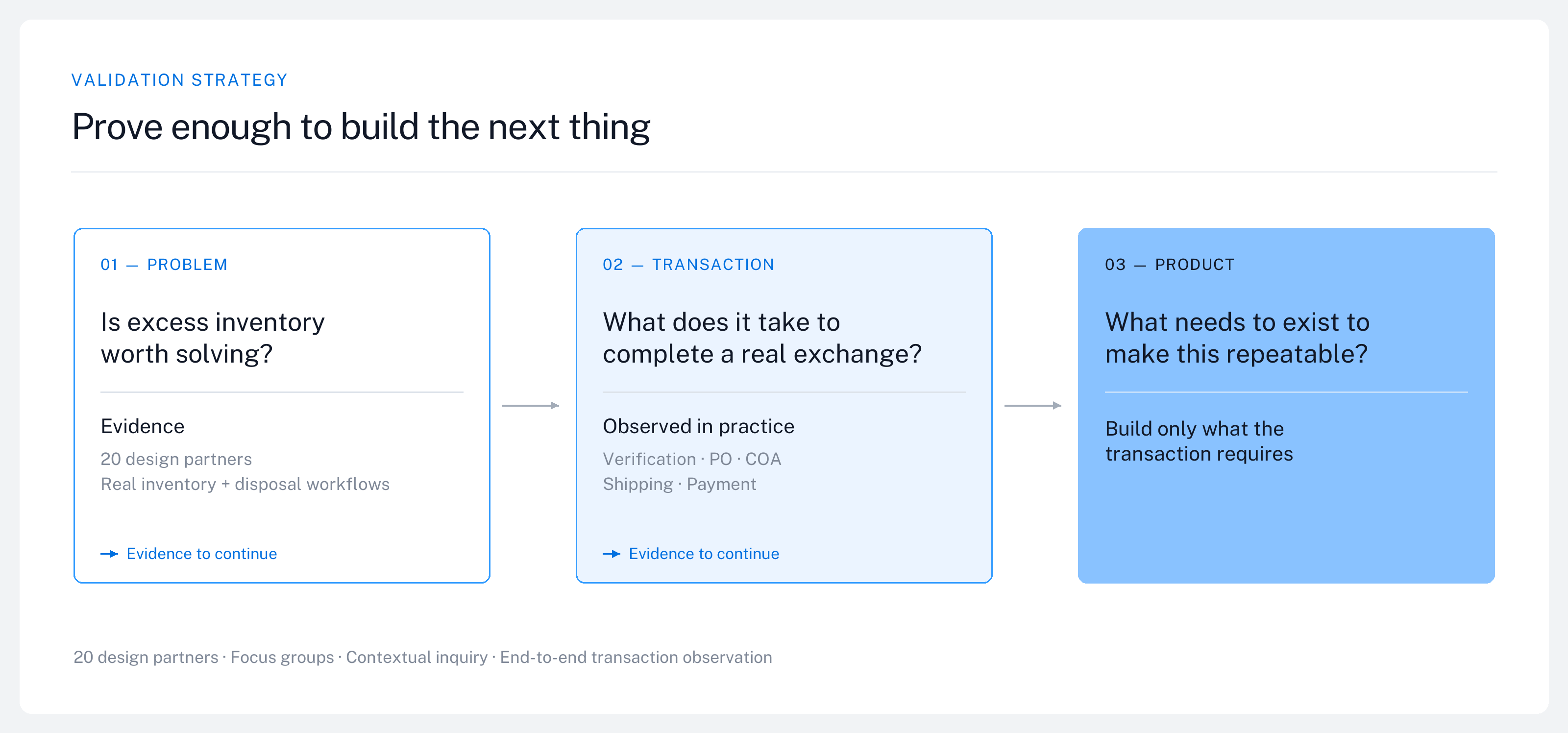
Observing transactions first hand allowed insight into the process
As we facilitated transactions, I was able to observe and interview everyone involved as the material changed hands until completion.
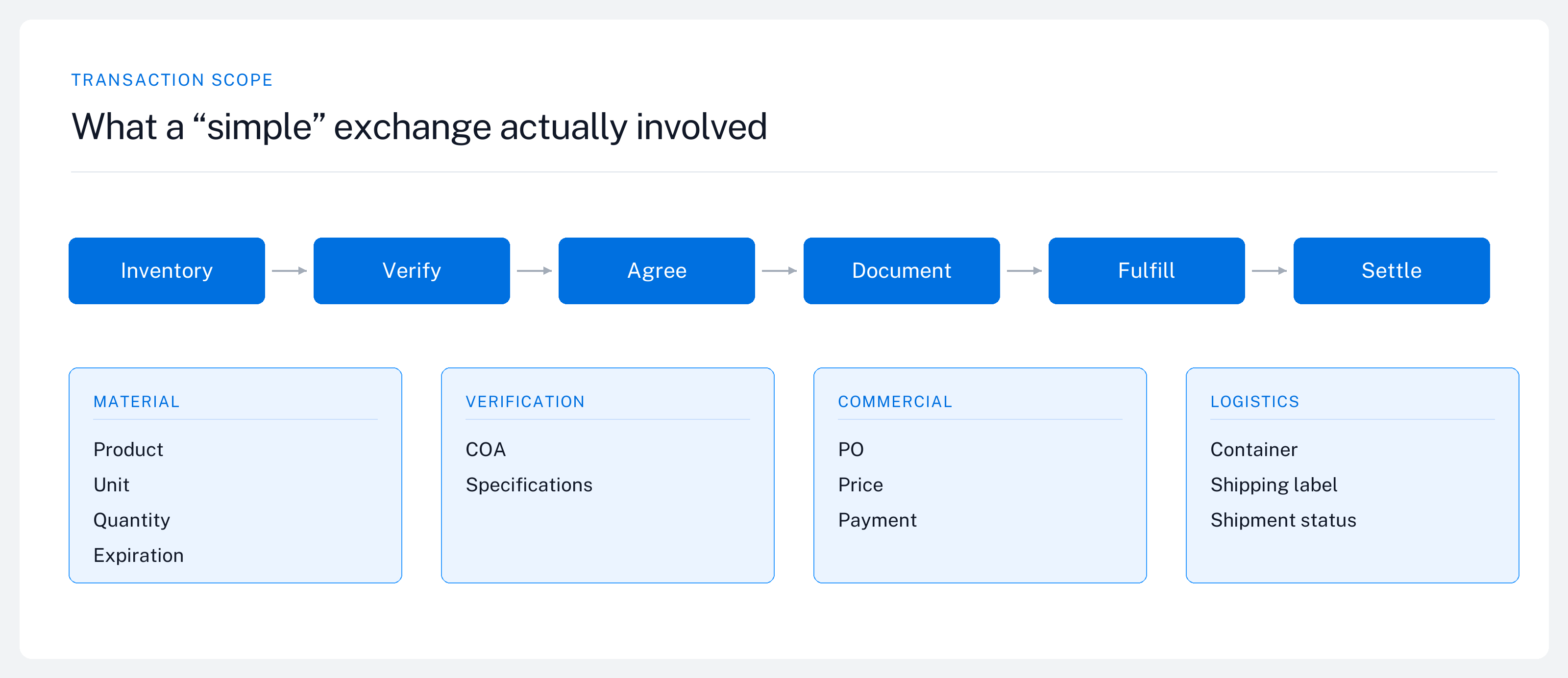
What I learned and how it shaped design
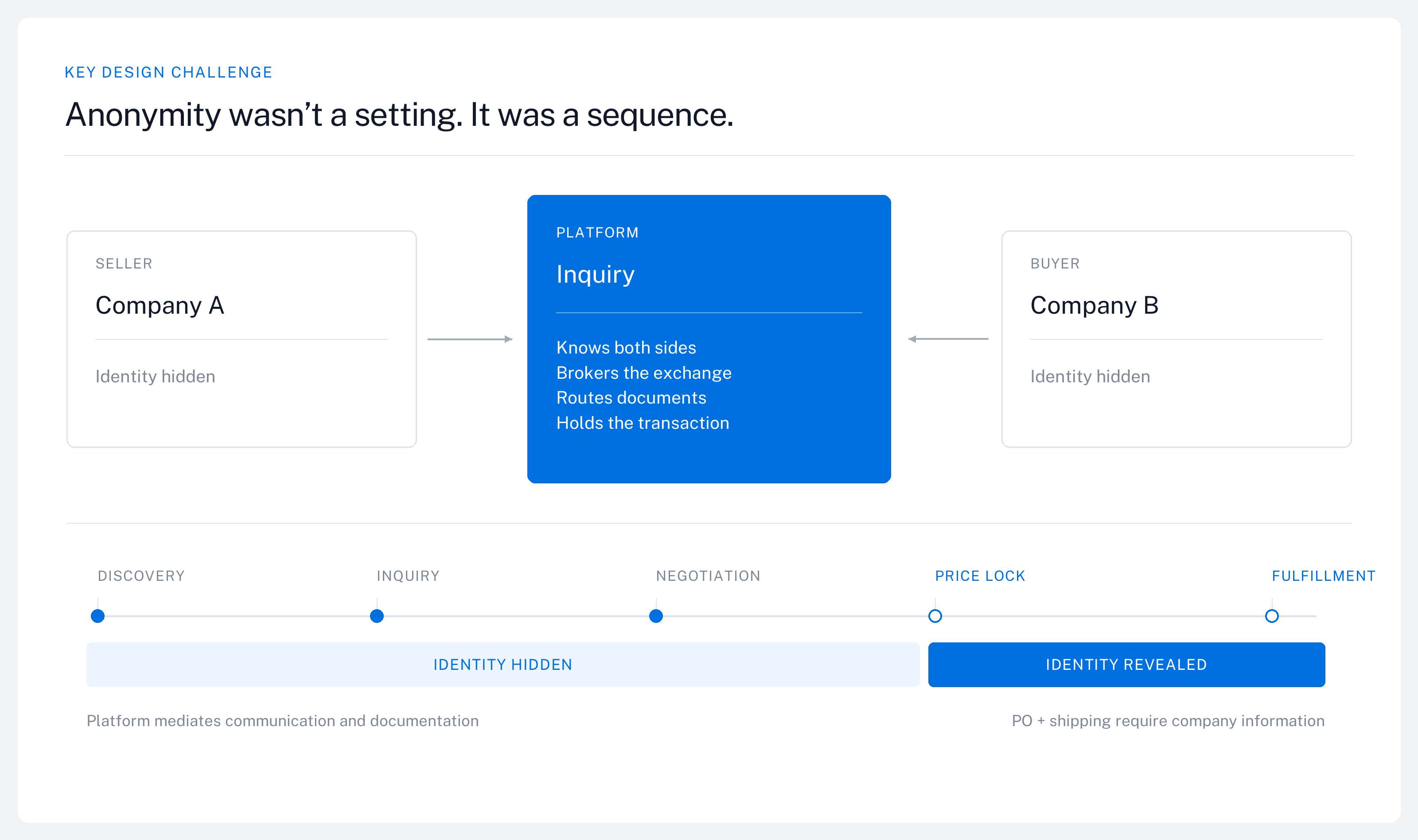
- Identity must stay hidden through discovery, negotiation and payment — revealed only where logistics forces it.
- A neutral middle party has to hold funds until delivery is confirmed.
- Sellers disengage fast when they are asked about materials they do not hold.
Running the exchange over email
We tested an anonymous exchange using email. Rather than ask whether people would trade, we helped run real deals: a request went to the group as “Participant A needs X,” and we passed messages between the buyer and seller.
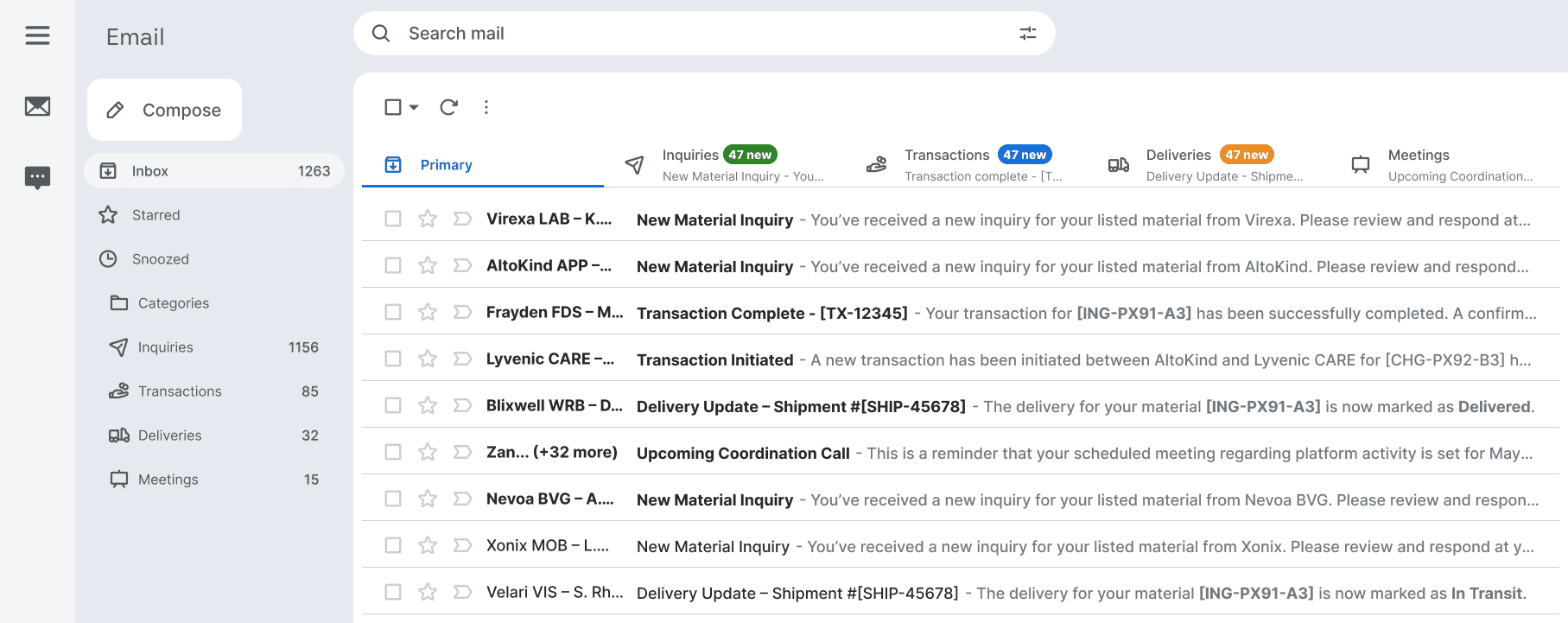
The demand was real: people negotiated prices, produced the paperwork, and trusted us to hold money until delivery. But ~95% of inquiries hit sellers who couldn't help, and the more noise they got, the less they replied.
The inquiry platform
We knew the marketplace was the destination. So why didn't I build it first? Because the only thing validated was that anonymous deals close — not that anyone would publish inventory.
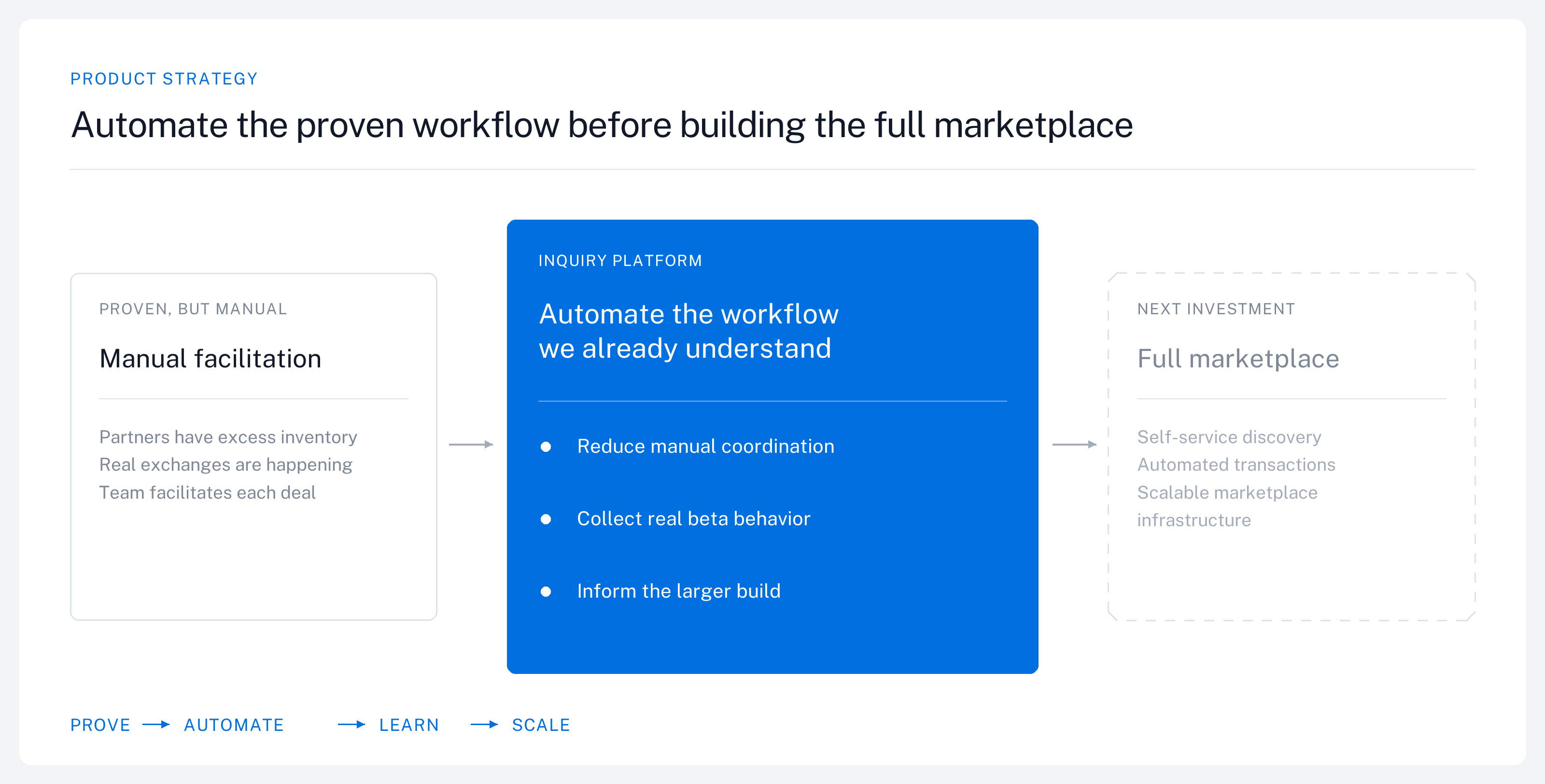
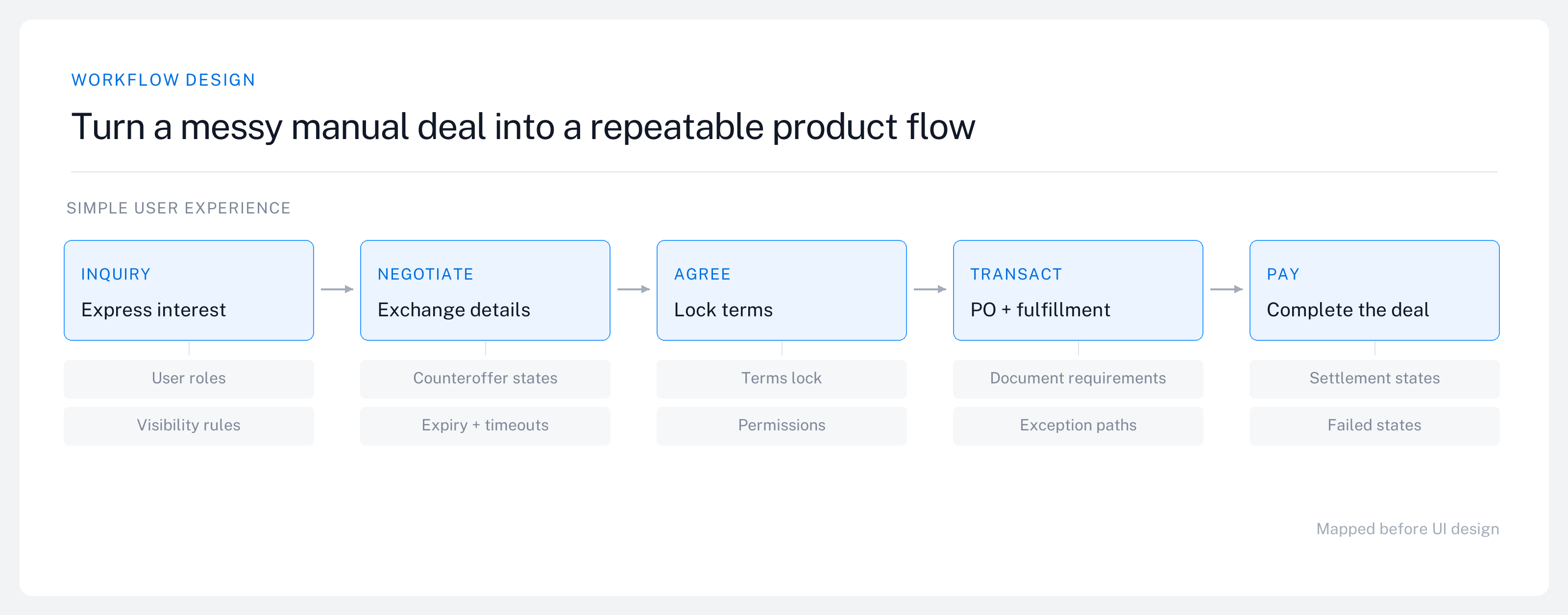
I mapped the user journey and flow for inquiries, transactions, and payments
I considered happy paths and the edge cases for messy situations — which set the standards, design, and architecture for the site.
The hardest design challenge was anonymity
You can't hide everything, since a shipping label needs a real address. So anonymity works as a sequence — each party learns only what the next step requires.
Let's see the inquiry platform design
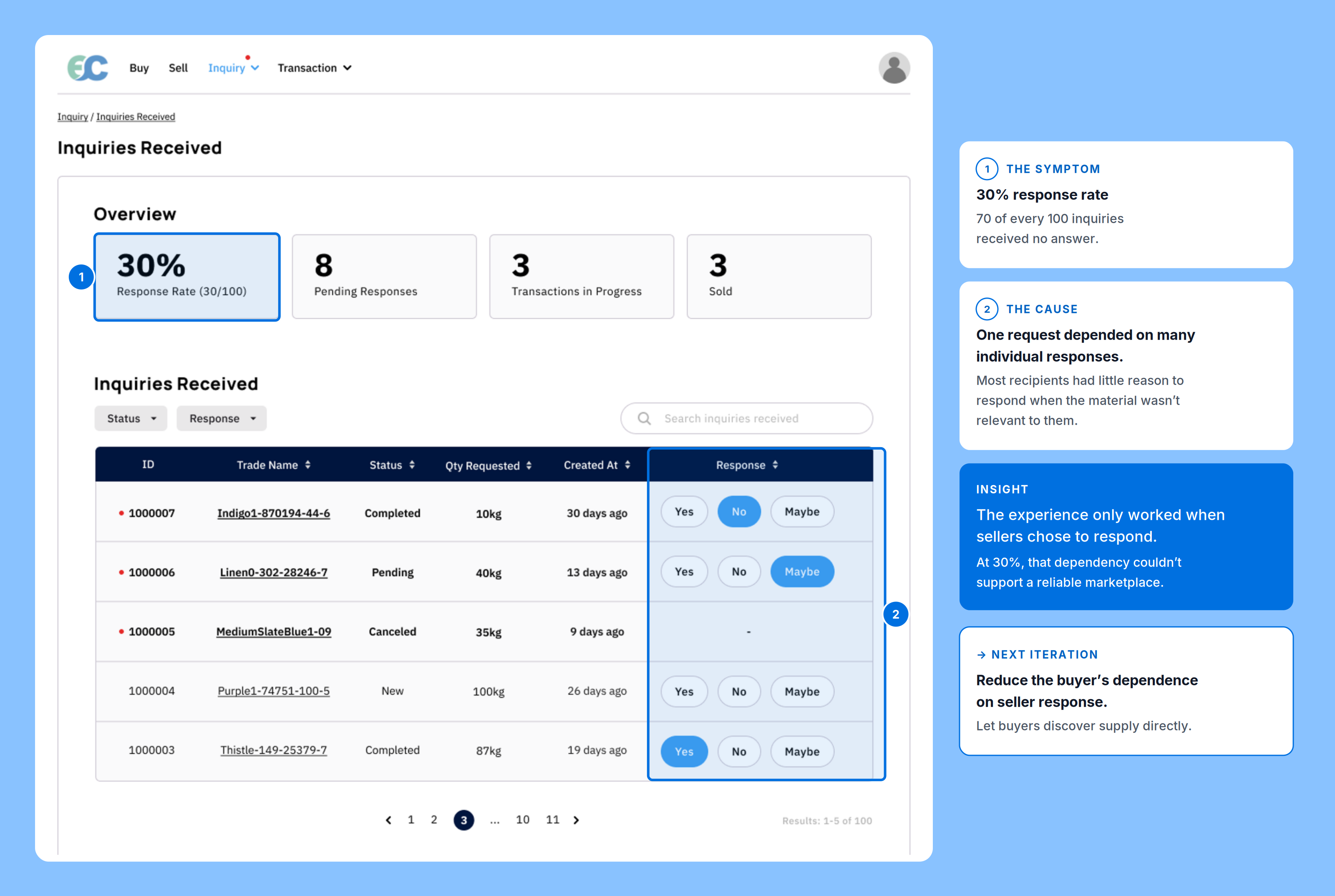
Six months of beta data, and a structural flaw
Within 6 months, users each saved an average of $4k in potentially wasted supplies, preventing ~2 tons of product from entering landfills. People came back and traded again. But engagement wasn’t growing.
Customers
Transactions
Saved / customer
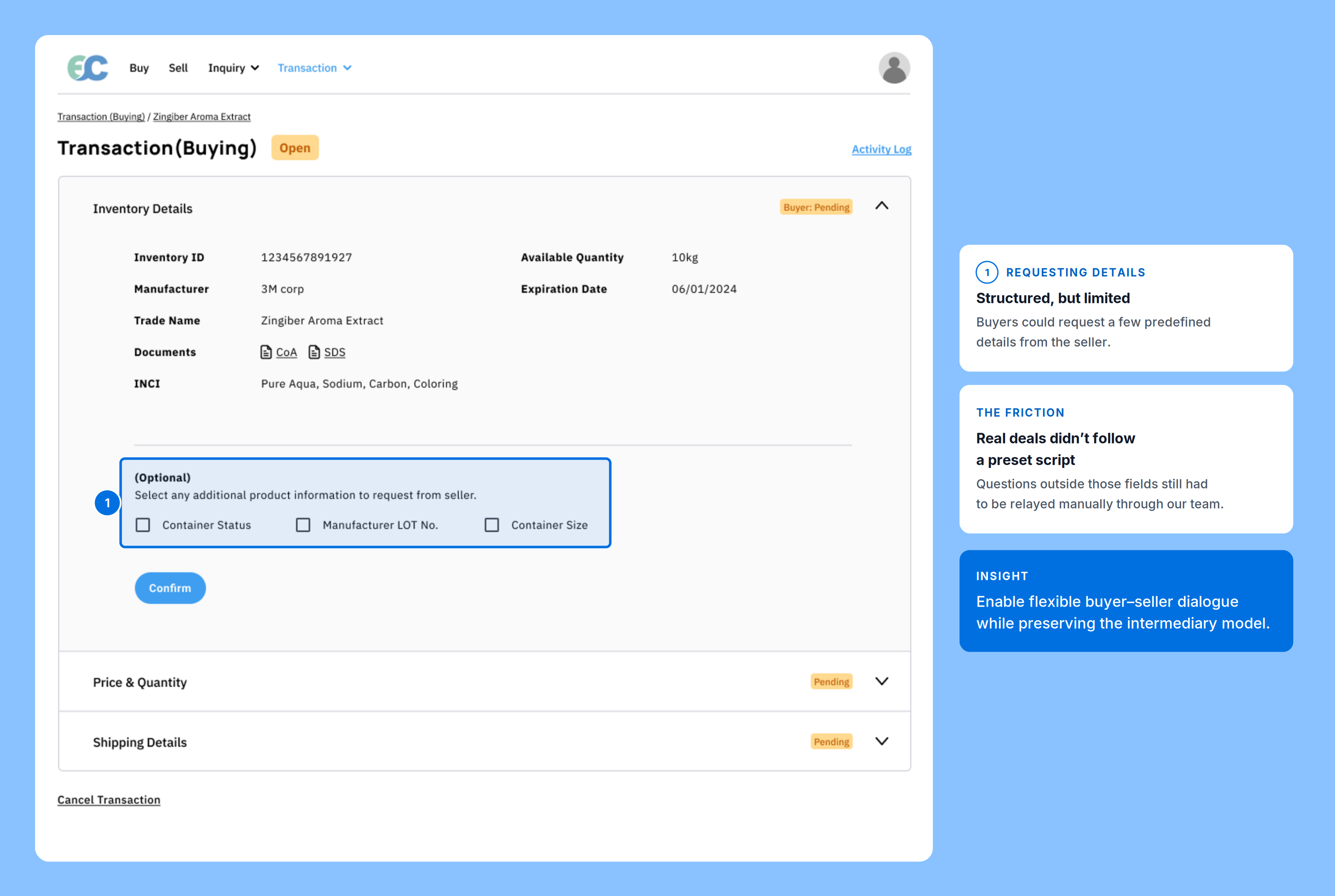
The request model limited growth. Most sellers did not have the material a buyer asked for, so they did not reply. Buyers could not see what was available and began to lose trust that they would get an answer. Privacy worked, but the product gave buyers no way to check available inventory.
It would be much easier if I could upload a CSV of my available excess inventory.
Deals were slow for a related reason: buyers and sellers couldn't just call each other, and we hadn't built chat to replace that. It wasn't easy to accept that our most successful build had this flaw — but now we knew exactly why it failed and what to build instead.
Redesign as a marketplace
After the beta, I redesigned the exchange around available inventory instead of open-ended requests. I wanted buyers to see what sellers actually had, while sellers could list materials once instead of answering inquiries they could not fulfill. I built a working prototype to follow a deal from discovery through completion.
I kept identities private during discovery and added chat so buyers and sellers could work through the details without calling each other directly.
Making materials findable
I let buyers search by SKU, standard name, or INCI and filter by industry, category, and function, because they may know what a material does without knowing its exact name.
Orders and partial sales
I designed an order flow that tracks negotiation, payment, and shipping while reserving only the quantity a buyer requests, leaving the rest of the listing available.
Vendor inquiries
I gave vendors one place to review buyer questions and respond to requests they could fulfill.
Vendor orders
I made each order's status and next step visible so vendors could manage negotiation, shipping, and completion without relying on our team to relay updates.
Inventory and account roles
I split the account by role so warehouse staff could upload drafts, account managers could manage sales, executives could oversee activity, and admins could approve listings before they went live.
We need to be careful with including new participants, as they need to understand our policy, anonymity and fair trade agreement.
Vendor registration
I built verification and an agreement into signup so new vendors could be vetted before they gained access to the private marketplace.
The company did not ship this redesign after priorities changed, so I continued the prototype independently.
Lower costs, less waste
Transactions
Total traded
Waste prevented
During the six-month beta, partners completed more than 100 transactions worth about $80K. Customers saved an average of $4K in supplies that might otherwise have gone to waste. Moving excess inventory into another manufacturer's hands also freed warehouse space and kept about two tons of material from being discarded.
I had to look past “it works”
The inquiry platform completed real transactions, so it would have been easy to say, “If it isn't broken, don't fix it.” But buyers still waited for replies, sellers received requests they could not fulfill, and every deal took more coordination than it should have.
I learned to look beyond whether a system works and ask how much effort it takes to use. I redesigned the exchange so partners could find materials directly and complete more trades with less work.