Site manager
- Behaviors
- Planning, assignments, leading the on-site crew
- Goals
- Keep the plan current; run the week at high operational efficiency
- Pain
- Missing timesheet data, delayed invoice approval
Agentic AI to handle routine workforce tasks so operators can focus on decisions that require approval.
Three problems came up each week: staff re-entered timesheet details by hand, invoices were delayed while teams checked purchase orders and receipts, and approvals waited in email.
Meticulously comparing these timesheets and correcting inconsistencies costs a lot of time.
Payment is held up until the PO, a receipt, and a timesheet agree, meaning workers are paid before the agency gets compensated.
The next action lives in someone’s email, so exceptions surface days after they cost money.
I compared 14 workforce products to see how well each worked for factories and staffing agencies. None worked well for both.
| Vendor | Category | Staffing fit | Mfg fit | Hybrid |
|---|---|---|---|---|
| Bullhorn | Staffing OS | 5 / 5 | 1 / 5 | 2 / 5 |
| TempWorks | Staffing OS | 4 / 5 | 2 / 5 | 2 / 5 |
| Shiftboard | Mfg WFM | 1 / 5 | 5 / 5 | 2 / 5 |
| UKG WFM | Mfg WFM | 2 / 5 | 4 / 5 | 3 / 5 |
| ShiftForge | Orchestration layer | 4 / 5 | 4 / 5 | 4 / 5 |
of a coordinator’s week, reconciling timesheets by hand
of invoices need a rate or overtime correction
to resolve a billing dispute over email
“If a temp worker goes into overtime, I don’t find out until the invoice comes.”
“We approve time in one system, then re-enter it in another to generate the invoice.”
Each week, teams add workers, assign shifts, fill open roles, and check invoices across two systems. Basic automation can handle routine cases while an agent flags exceptions that need attention.
The agent sometimes cited time entries that did not exist. The app now checks every reference against real data before showing it.
The same question got different answers from different model versions, so I locked the answer to a fixed shape the app validates every time.
The agent wanted three paragraphs where one sentence would do. Length is capped in the prompt and again in the app.
It would confidently invent what it did not know. I gave it a way to say “I don’t know” — and made that the only option when it isn’t sure.
Paying a vendor per question added up fast, so for the pilot the agent runs on the customer’s own machine on a free open-source model.
I gave each of the three agents one job, a set response format, and a clear point where a person takes over.
| Agent | Input | Output | Approval boundary |
|---|---|---|---|
| Reconciliation Agent | This week’s time entries and rate cards | 3–5 typed flags with citations and proposed resolutions | Plant supervisor approves any flag that affects billing |
| Coverage Agent | Next week’s demand and the current roster | Coverage flags, ranked candidate suggestions per open shift | Coordinator dispatches, supervisor confirms |
| Workspace Assistant | The active surface plus the palette query | Free-form chat scoped to the current view | Never moves state, only proposes |
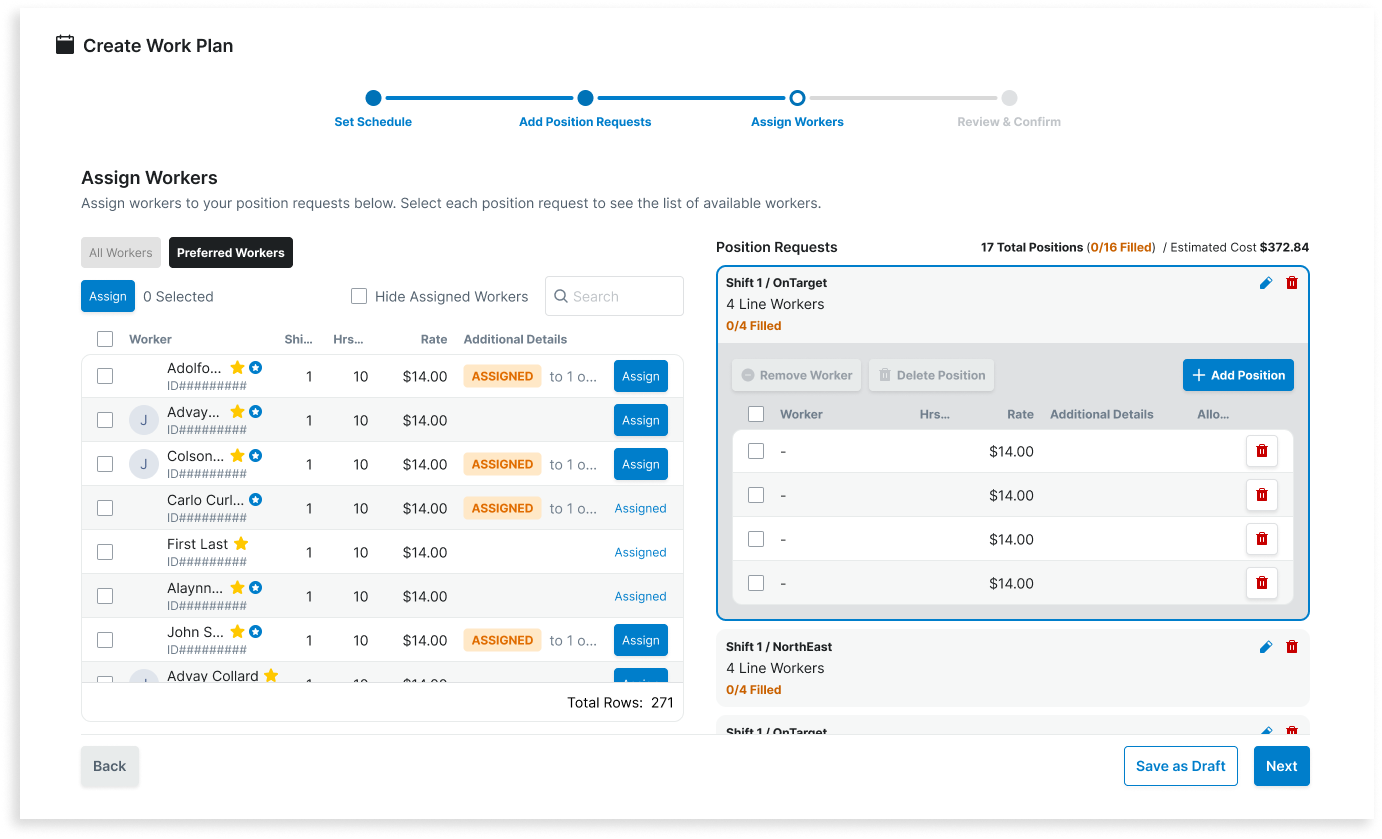
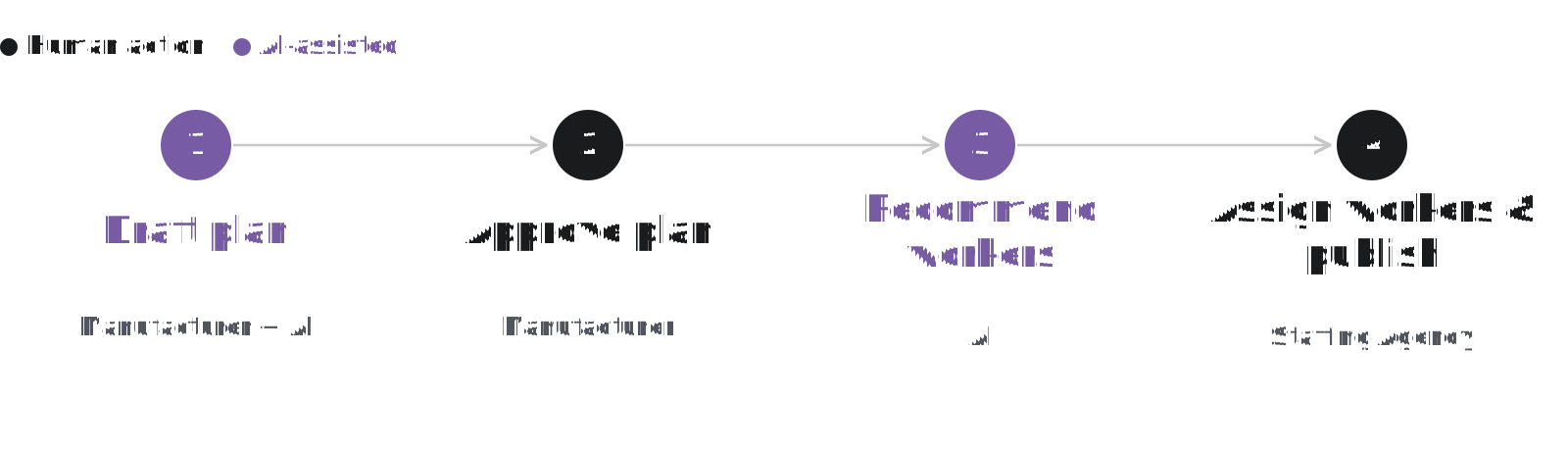
When a shift needs coverage, the system ranks available workers by certification, availability, cost, and distance. It gives the supervisor a shortlist and explains why each person was suggested.
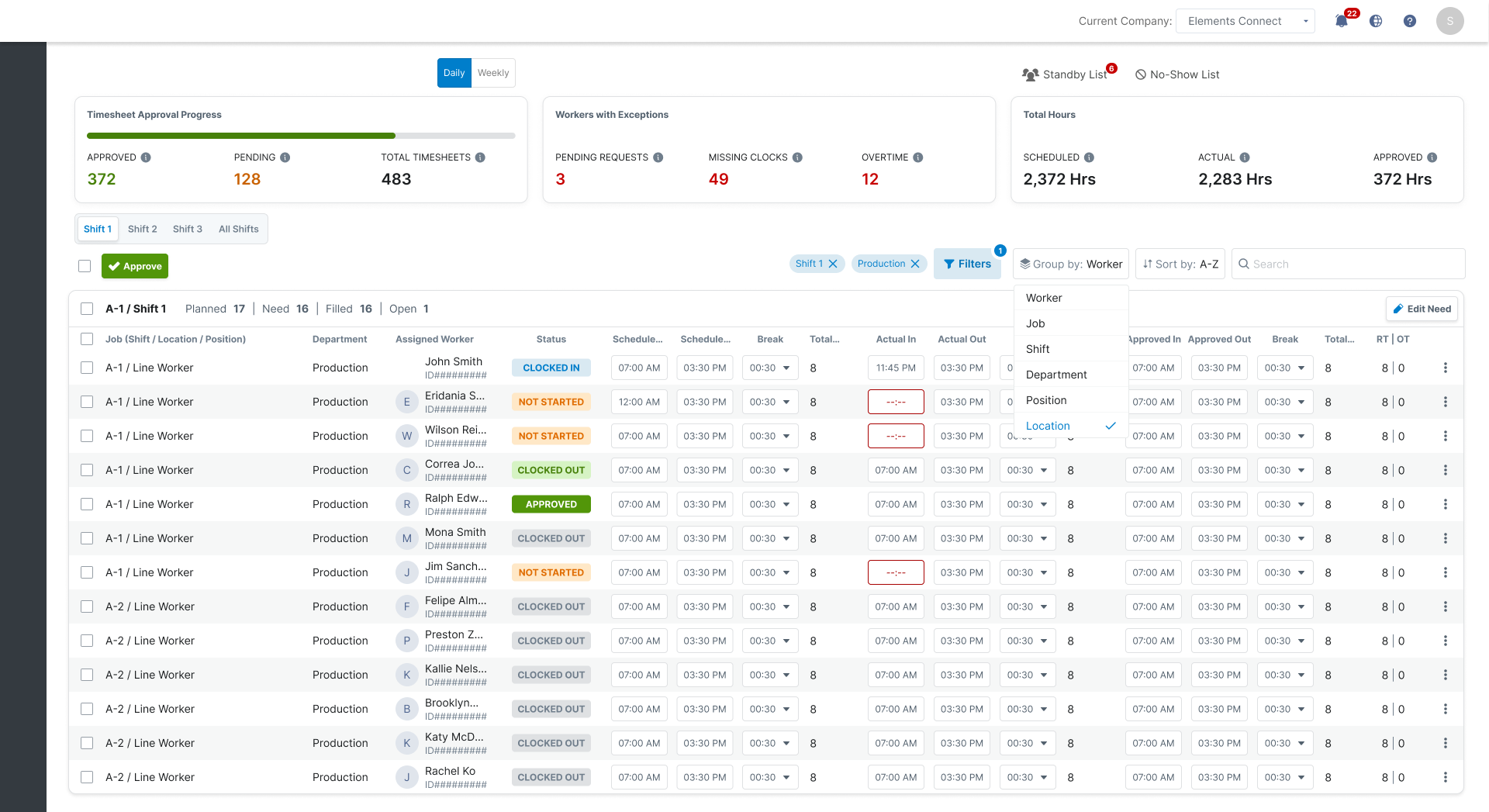
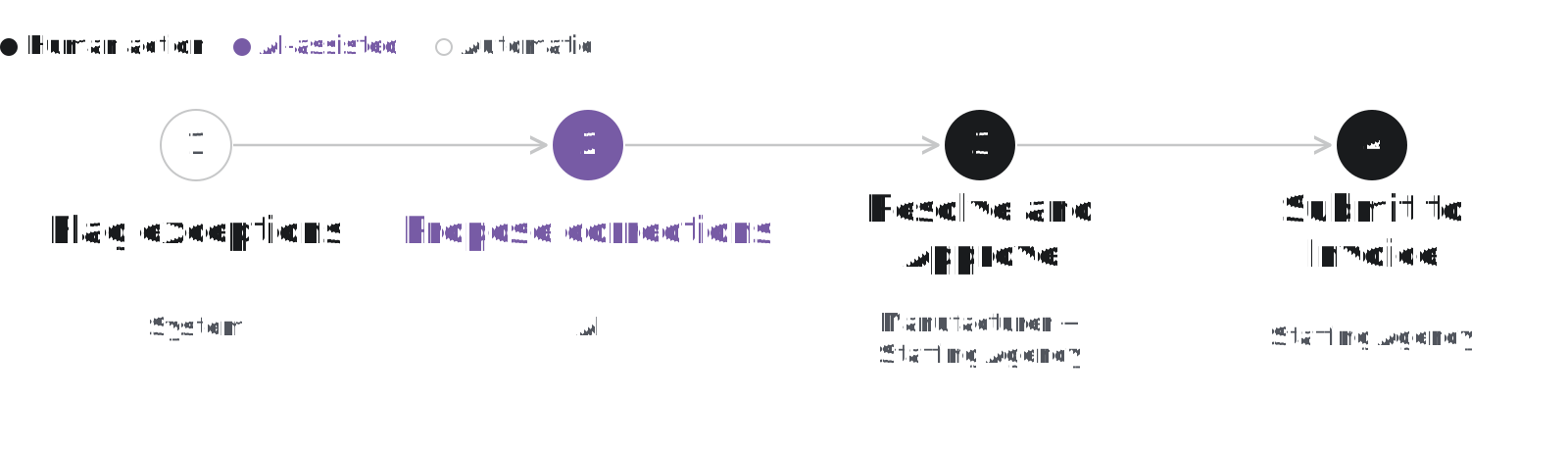
Overtime, missing punches, geofence issues — all flagged automatically with a proposed fix attached. Nothing touches pay or a worker’s record until a named person clicks approve.
The moment a worker crosses the overtime threshold it is flagged — not discovered a week later when the invoice lands and there is nothing left to plan around.
Before the agent writes a word of an invoice, it retrieves the real timesheet, rate card, and policy behind that line, and shows what it looked up. It can’t invent a number it can’t point to.
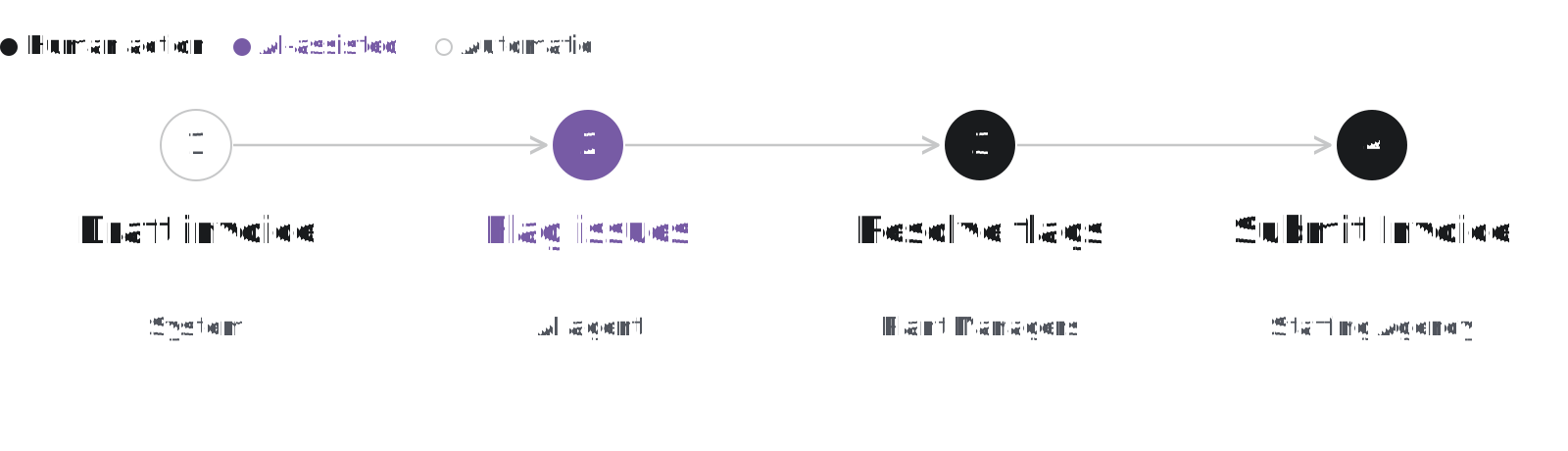
Every flag carries its evidence. Every approval is logged with who, when, and why. Every action can be reversed by a person with the right permissions.
less planning setup, with auto-built plans
surprise overtime
chasing exceptions
3× faster · 48 hours saved per cycle
Slow invoice turnover requires chasing down workers, manual corrections, and cross-checking two systems.
Zero rework · clean on first pass
Corrections are needed today because hours are keyed in manually across two systems, so mismatches and data-entry errors slip through unchecked.
21%+ less · 0.8+ hrs saved per worker weekly
Unintended overtime occurs when workers near overtime cover for unexpected lapses in coverage.
I will continue testing the product with staffing agencies and manufacturers.